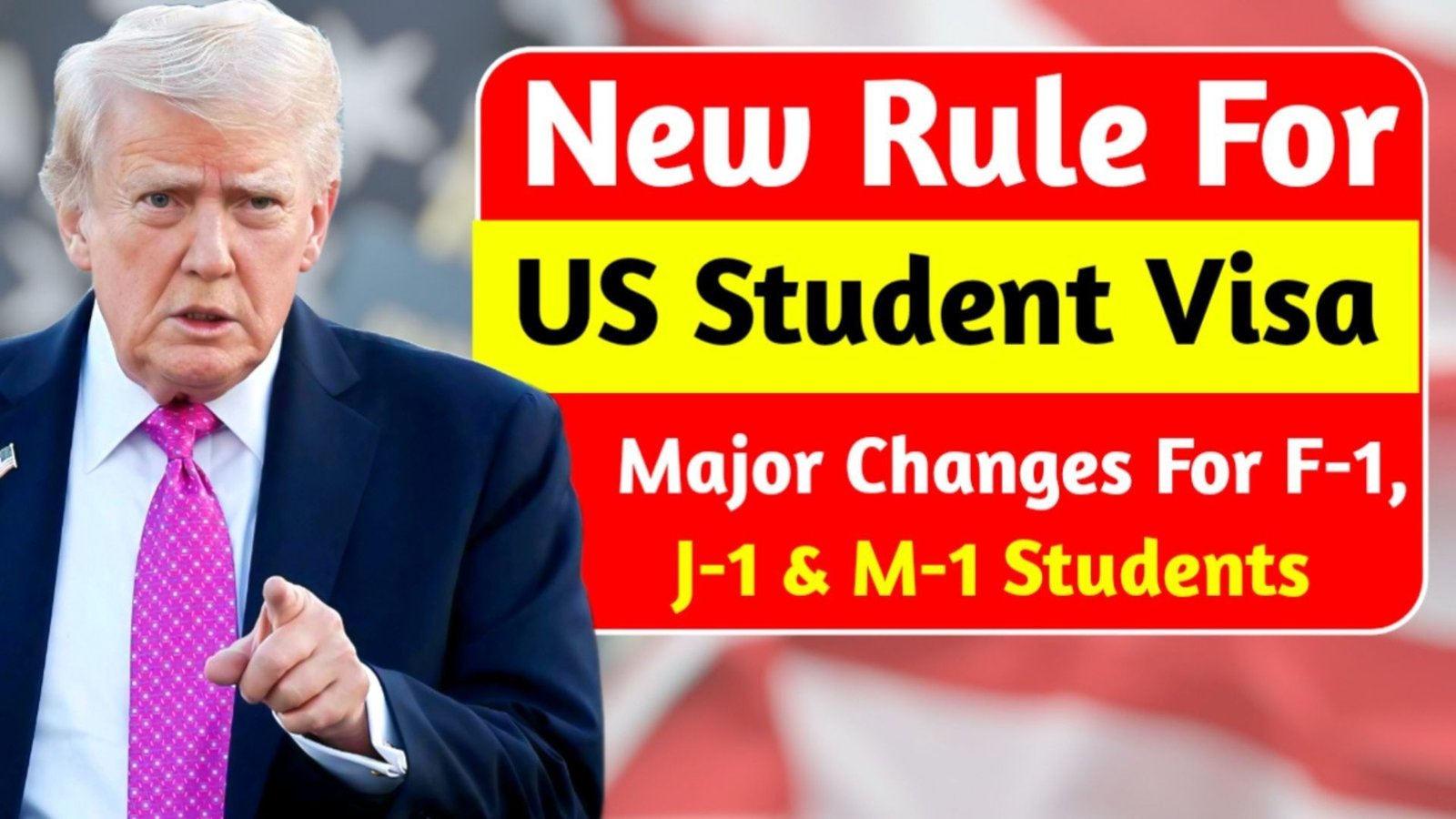
Imagine planning your dream U.S. education only to face a ticking clock on your stay— that’s the reality for thousands as President Trump unveils sweeping Trump student visa changes 2025. Announced via the Department of Homeland Security (DHS) in late November, this proposed rule scraps the flexible “duration of status” for F-1 visa duration limit, J-1 visa updates 2025, and M-1 visa eligibility, capping them at four years max. Aimed at curbing abuse and boosting security, it could disrupt PhDs, exchanges, and vocational tracks, sparking outcry from universities over $7 billion in lost revenue. With public comments closing soon and implementation eyed for early 2026, international students from India, China, and beyond must scramble. Here’s your no-fluff guide to the new US student visa rules, eligibility tweaks, and next steps.
What Are the New US Student Visa Rules?
This DHS bombshell replaces indefinite stays with rigid timelines, forcing regular renewals and vetting for Trump F-1 J-1 M-1 reforms. F-1 academic students, J-1 exchange visitors, and M-1 vocational trainees now face a four-year ceiling, tied to program length but no longer open-ended. Post-study grace periods shrink to 30 days, down from 60, pressuring quick OPT or H-1B shifts. Trump calls it a “common-sense fix” against overstays, citing over 2,100 long-term F-1 holders from 2000-2010 still active. Critics slam it as a talent drain, hitting mid-tier schools hardest amid rising visa scrutiny.
Who Qualifies Under the Updated Rules?
US international student policy now demands tighter proof of intent, with no changes to core entry but harsher extensions. Eligible applicants must hail from non-banned nations (e.g., no Afghanistan or Yemen under expanded travel restrictions). Valid passports, SEVIS-approved programs, and financial docs remain staples, but expect deeper social media checks and sponsor reporting. Long-program seekers like med students face the biggest hurdles, needing DHS nods for any overage.
Basic Requirements for F-1, J-1, M-1 Visas
To snag approval under DHS student visa cap: Full-time enrollment in SEVIS-certified schools. Proof of funds covering tuition and living without U.S. work reliance. Intent to return home post-study, backed by ties like family or jobs abroad. No prior violations; clean immigration history mandatory.
Key Changes by Visa Type
| Visa Type | Old Rule | New 2025 Limit |
|---|---|---|
| F-1 (Academic) | Duration of status | 4 years max, program-tied |
| J-1 (Exchange) | Flexible per sponsor | 4 years, 30-day grace |
| M-1 (Vocational) | Up to 1 year + extension | 4 years, stricter OPT |
Extensions require USCIS petitions with biometrics and fees, upping costs by hundreds.
Affected Groups and Exemptions
PhD candidates and researchers hit hardest; au pairs and short J-1s less so. Exceptions for government-funded programs or critical fields like STEM, but rare. Current visa holders get grandfathered until expiration, per NAFSA reports. Banned-country students auto-denied; waivers tough.
When Do These Changes Take Effect?
The rule hit the Federal Register in August 2025, with comments due December 15. Final rollout targets January 2026, but interviews ramp up now via U.S. embassies. F-1/J-1 renewals post-January face the cap; M-1s align immediately. Track via DHS.gov; delays could spike wait times to 6+ months in high-volume spots like Mumbai.
Steps to Navigate the New Visa Rules
Apply early—start SEVIS six months out via your school. Gather extras: Bank statements, affidavits, and program letters proving under-4-year fit. Consult immigration pros; free clinics at IIE or NAFSA for low-income applicants. Backup plans: Eye Canada or UK if U.S. odds sour; monitor waivers for your country. Report address changes within 10 days to avoid termination.
Why These Trump Reforms Matter Now

Beyond borders, this squeezes U.S. campuses—60,000 jobs and billions at risk, per NAFSA. For students, it’s rushed timelines and fractured networks; for America, a brain-drain blow in STEM races. Yet proponents tout security wins, curbing fraud in OPT/CPT. As December deadlines loom, it’s a wake-up for global talent pipelines.
FAQs – Trump Student Visa Changes 2025
- Does the Trump student visa changes 2025 apply to current students? No—grandfathered until expiry, but renewals hit the four-year cap.
- Can PhD students exceed the F-1 visa duration limit? Possibly via extensions, but DHS scrutiny is fierce—prep strong cases early.
- What’s the grace period under J-1 visa updates 2025? Slashed to 30 days; plan OPT or departures meticulously.
- How does M-1 visa eligibility change? Capped at four years with tighter vocational program ties and reporting.
- Are there bans tied to US international student policy? Yes—12 countries restricted; check State Department for waivers.
Conclusion
Trump’s new US student visa rules mark a seismic shift, capping F-1 visa duration limit and beyond to fortify security—but at what cost to innovation? As 2025 closes, verify your status on DHS.gov, file comments if impacted, and pivot plans wisely. This isn’t just policy; it’s your future on the line. Stay vigilant, consult experts, and turn hurdles into launches—America’s doors may tighten, but your ambitions won’t.